AI Hype vs. Reality: A 2026 Strategic Playbook for Retail Leaders
By 2026, retail will have moved past the shiny object phase of artificial intelligence.
Boardrooms are no longer debating whether to invest in AI. The harder question now is why so many implementations launched in 2024 and 2025 are still failing to move the P&L.
AI is proven. It’s mainstream. It’s affordable. Yet for many retailers, it remains stuck in pilots, dashboards, and experimental tools that add complexity without delivering real operational lift.
To cut through the noise, we spoke with two retail technology leaders operating at very different layers of the value chain:
- Jaime Syjuco, a veteran fashion retailer running 70+ stores across Southeast Asia who now advises brands as a fractional CDAIO and data scientist
- Aman Agarwal, Senior Director of Technology at Love, Bonito, one of the region’s most advanced omnichannel fashion brands
Their shared conclusion is blunt: AI doesn’t fix broken processes. It amplifies them.
What follows is a grounded playbook for retail leaders who want results, not rhetoric.
Reality 1: The Foundation Trap - Why “Fix Everything First” Slows AI Down
For years, the dominant advice in retail tech has been clear: Build a pristine data foundation first, then layer AI on top.
In 2026, both contributors argue this thinking is actively harmful but for different reasons.
Test First, Build Later
As a retailer, Jaime admits he made the classic mistake of rushing into AI. Ironically, that misstep ended up saving the business.
“Do not put the cart before the horse. A data foundation is not a bolt-on IT system. It requires new roles, pipelines, governance, and risk. If you build it before you know where the value is, you burn time and capital.”
In practice, this showed up in the most familiar AI failure mode: garbage-in, garbage-out where incomplete, biased, or siloed data simply produced faster noise.
Instead, Jaime advocates a “test first” philosophy.
By running simple machine learning models on subsets of legacy data, his team learned a hard truth:
- Roughly 50% of their data showed strong predictive signal
- The rest including pricing and some allocation logic produced no usable insight
“If there’s no signal, AI just gives you faster noise.”
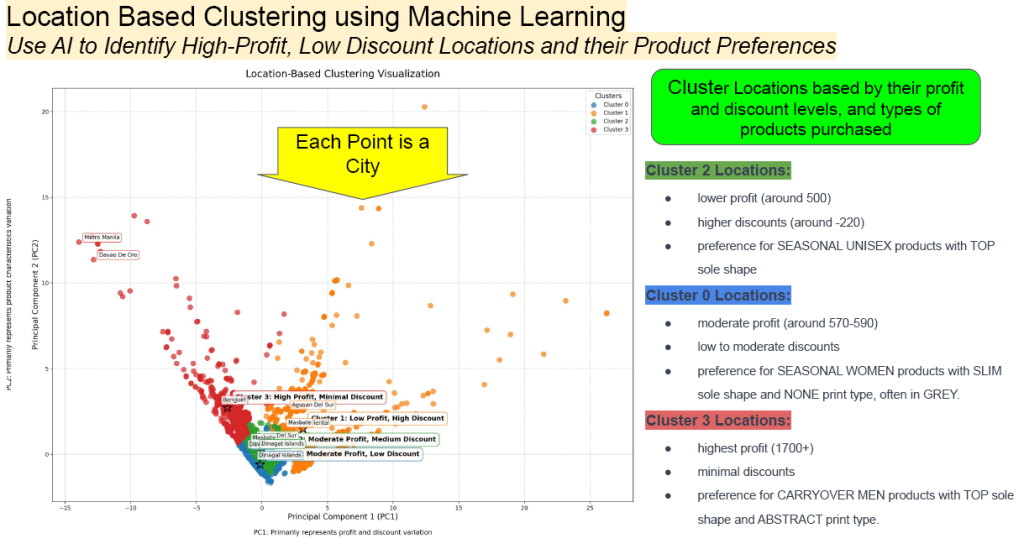
Only after identifying where AI could outperform humans did they invest in scaling infrastructure. Only the use cases that passed what Jaime calls the ‘math test’ were allowed to scale.
Process First, Then Accelerate
Aman agrees that AI fails when foundations are weak but draws a sharp distinction between internal experimentation and customer-facing deployment.
“Retail teams try to AI their way out of broken processes. The most common example is customer service bots launched without a structured knowledge base. You end up with a very confident bot giving very inconsistent answers.”
At Love, Bonito, this lesson surfaced early. Before rolling out AI agents, the team realised their existing FAQs were insufficient. To be useful, AI needed access to real-time operational data such as order status, store credits, parcel tracking via clean APIs.
“AI can’t invent institutional knowledge. It reflects what you feed it.”
Aman sees the same failure pattern in creative AI as well:
“We’ve seen this with AI catalogue image generation. The technology can move fast, but without strong product specs and visual standards, you get hallucinated stitching, wrong proportions, or details that don’t exist in production.”
The problem isn’t the model. It’s the inputs.
When foundations are weak, AI doesn’t create clarity, it accelerates inconsistency.
The Strategic Reality
The apparent tension between “test first” and “process first” hides a more practical truth:
- Experiment early to discover value
- Apply discipline before scaling anything customer-facing
The winners in 2026 are not waiting for perfect data but they are ruthless about where AI is allowed to touch the customer.
Reality 2: Inventory: Where AI Actually Prints Money
If there is a true killer application for retail AI in 2026, it is not chatbots or dashboards.
It is decision automation in buying, replenishment, and inventory flow.
When AI Outperformed Human Buyers
In Jaime’s fashion accessories business, human buying teams delivered results that looked “normal” for the industry:
- 40% overstock
- 25% discounting
- 10% stock-outs
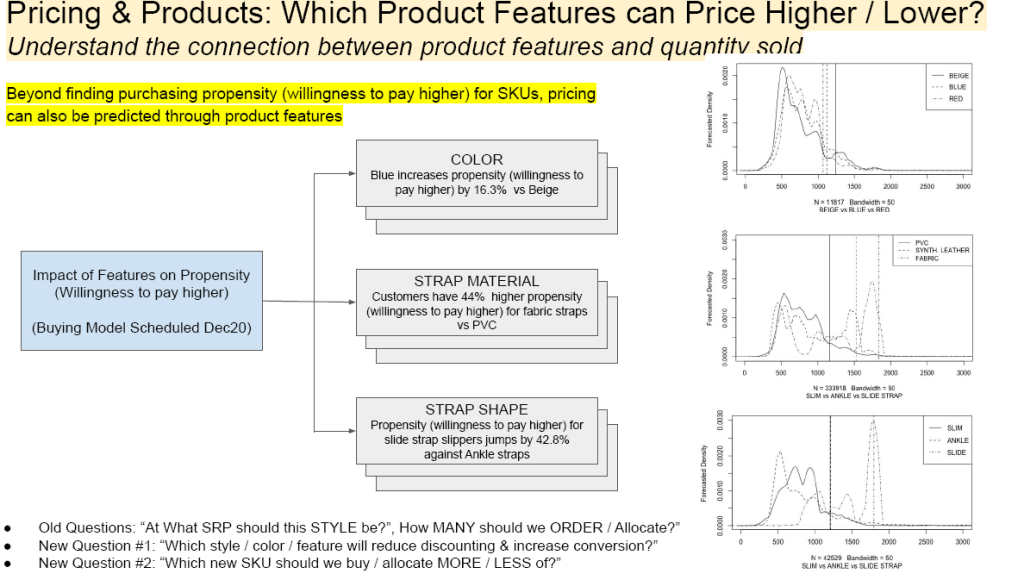
Using machine learning, his team analysed historical product attributes to identify what actually drove sell-through.
The result:
- Purchase orders generated in one day, not weeks
- Overstock reduced to 20%
- Discounting cut to 10%
- Conversion increased
- Profits doubled
“The machine didn’t replace buyers. It did what machines do better — pattern recognition at speed.” Humans stayed focused on trend judgment, supplier strategy, and category vision.
Augmentation Beats Autonomy
Aman sees the same opportunity but warns against fully autonomous systems.
“The winning model isn’t an ‘AI merchant’. It’s AI agents layered on top of forecasting systems, triggering inventory movements with human oversight for edge cases.”
In practice, this means:
- AI handles the 95% of routine decisions
- Humans step in for exceptions — new categories, supplier shocks, cultural moments
Retailers chasing fully autonomous buying are over-rotating. The ROI is in augmentation, not replacement.
Reality 3: IIf AI Can't Find Your Product, You Don't Exist
Retailers often talk about agentic shopping as a future concept.
For Jaime, it’s already here.
“Agentic AI turns a two-hour research process into a two-second purchase.”
Platforms like Shopee, Amazon, and Alibaba already drive a significant share of his sales and that share is rising fast.
But agentic shopping introduces a new competitive reality:
If an AI agent can’t understand your product, it can’t recommend it.
The Concrete Reality Check
Here’s the question every fashion retailer should ask:
When a platform agent searches for “summer wedding guest dress under $150,” does it find your product or your competitor’s?
If your catalogue only lists category, colour, and price, the agent defaults to whoever has richer data.
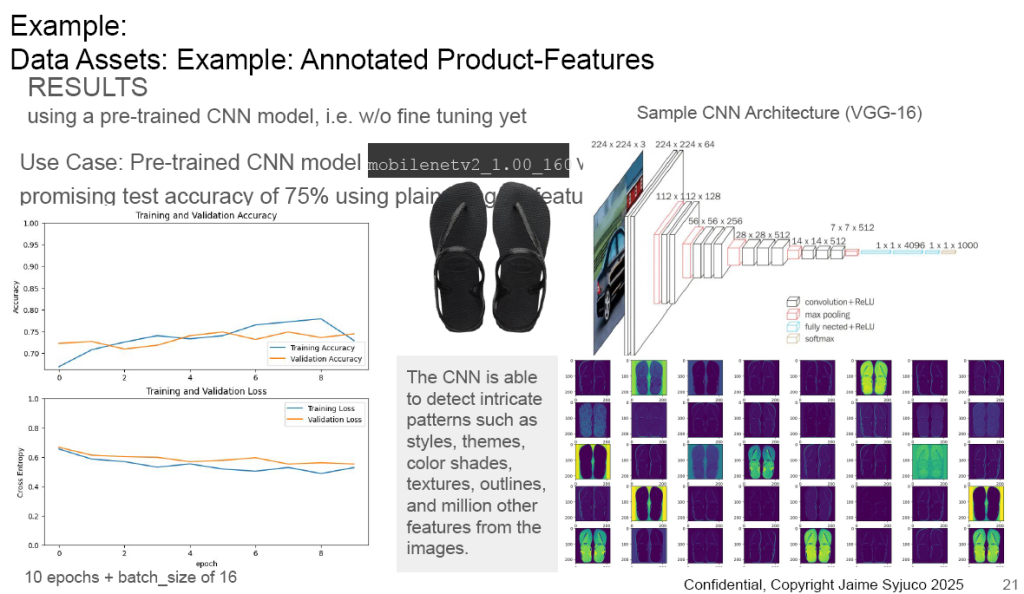
This is why Jaime’s team manually augmented their product data with dozens of additional attributes — fabric type, pattern density, material behaviour, colour codes — purely to improve agent visibility.
For most retailers, owning first-party customer data at agentic scale is no longer realistic — the platforms control the relationship.
“We can’t out-review Amazon or out-search Google. But we can make our products easier for agents to match.”
Trust Is the Limiting Factor
Aman adds a crucial counterbalance.
“Agentic shopping breaks down in two places: data structure and trust.”
If fit notes, sizing logic, or inventory data aren’t deeply structured and updated in real time, recommendations quickly feel inconsistent.
“One wrong sizing suggestion and the ‘AI stylist’ stops feeling like an expert and starts feeling like a random guess generator.”
There’s also a psychological ceiling. Many shoppers are still uncomfortable letting AI decide on their behalf especially in fashion, where fit, identity, and taste are personal.
“The sweet spot today isn’t autonomous shopping. It’s assistive AI supporting discovery while keeping the final decision human.”
The preparation is the same either way: structured, trustworthy, machine-readable product data.
Where Creative AI Actually Works
Aman is clear that creative AI does deliver value when used correctly.
AI-generated catalogue imagery and virtual try-on have improved dramatically in the past year. AI-assisted visuals at scale are now realistic.
But brands still overestimate full photoshoot replacement.
AI excels at speed, variation, and testing, not final brand storytelling.
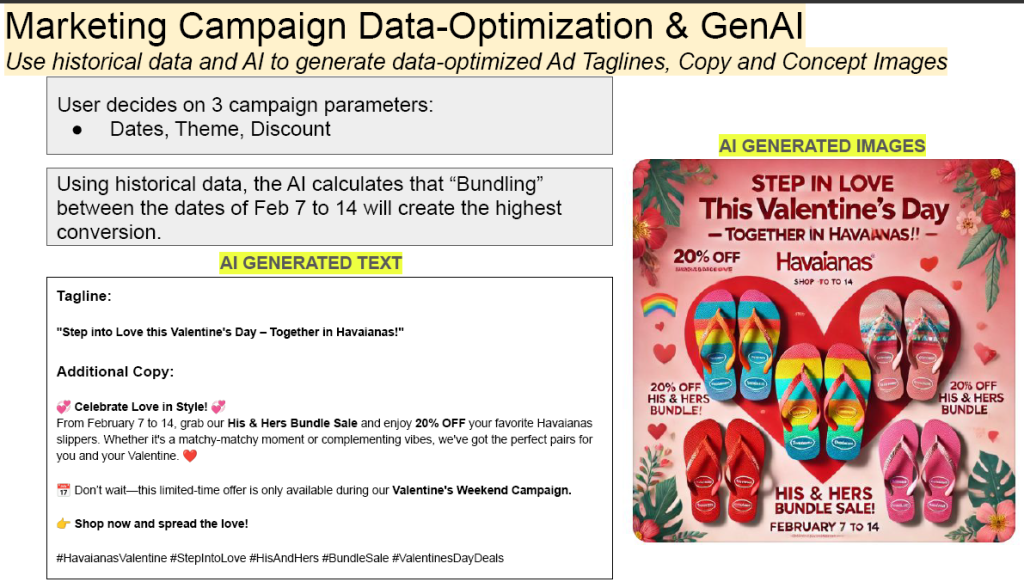
The biggest unlock may be marketing experimentation. Teams can rapidly generate styling variants, synthetic UGC, or creative concepts to test new audiences in paid channels.
Instead of waiting weeks for production, marketers can validate demand signals in days.
AI doesn’t replace creative teams. It radically expands how fast they can learn.
Reality 4: Culture, Not Code, Determines AI Success
Both contributors agree on one uncomfortable truth:
AI rarely fails because of technology. It fails because of people, incentives, and fear.
Separating Innovation to Protect It
In Jaime’s experience, AI work triggered resistance from retail teams who saw it as a threat.
His response was radical but effective: spin AI out.
By creating a separate AI and data science entity, his team could experiment without disrupting daily operations without triggering job-loss anxiety.
“AI is a science. Science requires risk. Legacy retail cultures are optimised for stability.”
Successful solutions were later reintegrated, backed by proven ROI.
Discipline Over Excitement
Aman takes the opposite but complementary view.
“AI readiness isn’t just technical. It’s experiential.”
Launching AI because it’s impressive rather than because the customer journey is ready, creates confusion and erodes trust.
For Love, Bonito, success depends on:
- Clear ownership
- Defined success metrics
- Guardrails and escalation paths
- Teams trained to work with AI, not around it
“Operational discipline, more than model sophistication, determines success.”
The Reality for Retail Leaders in 2026
Across foundations, inventory, agentic commerce, and culture, one pattern is clear:
AI success is less about ambition and more about sequencing.
Retailers who win will:
- Test AI where signal exists before scaling infrastructure
- Use AI to augment human decisions, not replace them
- Prepare product data for machine discovery, not just human browsing
- Design organisations that allow experimentation without fear
The technology is ready.
The platforms are moving fast.
The advantage now belongs to leaders who know where to move decisively and where to stop.
That is the difference between AI hype and AI that actually moves the business.
Download the agenda to see how Asia’s retail leaders are using scenario modeling and smarter process design to lead through the fog of 2026.